Chapter 4 · 03/24 ~ 03/30
Who Are We as Professionals?
As AI becomes capable of performing many counseling functions, the identity question ‘What is a counselor?’ is emerging.

Period 1 Presentation: Who Are We as Professionals?
Over three weeks, we've explored the possibilities and limits of AI counseling. This week, we return to the most fundamental question — in an era where AI can perform many counseling functions, what kind of being is a counselor?
Until now, professions were defined by “what can you do” — skills. If you code, you're a developer; if you write, a writer; if you counsel, a counselor. But when AI codes, writes, and does case conceptualization, this classification loses meaning. According to Research.com (2026), about 35% of clinical mental health counseling work is expected to be augmented by AI by 2030. So how will professions be defined? By “why do you do this work” — purpose.
This isn't new. By Joseon Dynasty standards, we're all multi-jobbers. Because technological infrastructure absorbed old job classifications. AI works the same way.
Case Study: From Multi-Jobber to Transition Planner
The instructor of this course, Hohyon Ryu, simultaneously does:
- CEO of OxoPolitics — Digital democracy platform
- CEO of Tobl AI — AI startup founder
- Adjunct Professor, Dept. of Counseling Psychology, Konkuk University
- Digital Transformation Team Lead, Taejae Future Strategy Institute
- Author — Superhuman Superwork, AI War of the Gods
- Speaker, National AI Strategy Committee
- IT policy advisor to politicians
- Developer — Builds all of this directly with Claude Code
By old standards, a multi-jobber. But there's one consistency across all these roles:
- Transitioning Korean security to global standards
- Helping counselors utilize AI
- Transitioning companies to AI-First
It's all “transition.” So this person's job is Transition Planner.
The Counselor's Place: From Healing to Self-Actualization
Grouping purpose-based professions reveals 6 major categories:
- Transition — Changing the world from A to B
- Healing — Reducing suffering, helping recovery
- Growth — Developing people and organizations
- Expression — Conveying meaning and emotion
- Protection — Guarding against danger
- Connection — Linking people to people
Counselors primarily sit in “healing” and “growth.” The structure for defining a profession is simple: [Target] + [Purpose Verb] = Profession.
- Transform
- Heal
- Grow
- Convey
- Protect
- Connect
And the purpose of counseling doesn't stop at “healing.” Rogers's actualizing tendency combined with Maslow's hierarchy of needs expands the scope of AI-era counseling from healing to self-actualization.
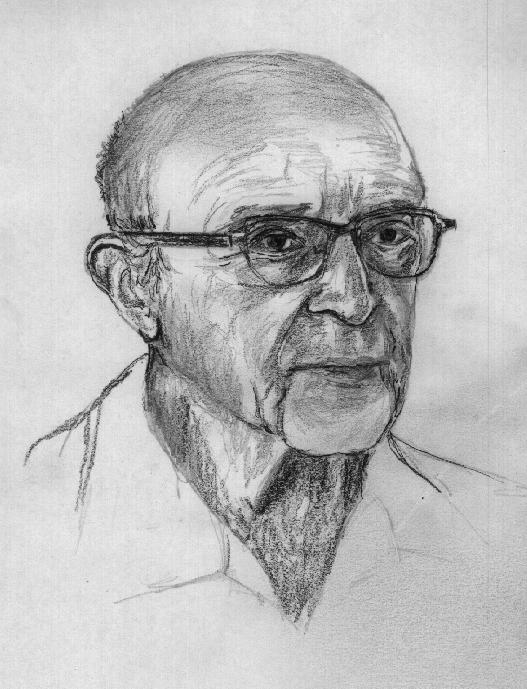
칼 로저스
There is an innate tendency in humans toward self-actualization. The counselor does not direct the path but provides the conditions for that tendency to manifest.
— Rogers (1961)Staying only in “healing” means only helping the afflicted. Expanding to self-actualization makes it everyone's domain. In the AI era, one person with purpose can create every form of output:
- Counseling
- AI counseling chatbot development
- Mood journal app
- Psychoeducation content
- YouTube channel
- Podcast
- Research reports
According to NPR (2025), the top reason Americans used ChatGPT was mental health treatment and emotional support — latent demand is overwhelming supply.
→ Read more: In the AI Era, Jobs Are Defined by Purpose, Not Skills
Period 2 Experience: AI Case Conceptualization
This Week's Reading: Can AI Assist Counseling Supervision?
Supervision is the educational process where experienced senior counselors (supervisors) review and provide feedback on novice counselors' (trainees') counseling. “AI supervision” means AI analyzes verbatim transcripts, simultaneously shows cases from multiple theoretical perspectives, and provides immediate feedback to support trainee learning.
Case conceptualization is the process of systematically understanding a client's problems within a theoretical framework and developing treatment strategies. Gainer(2025) argues in Chapter 6 that AI can “augment” rather than “replace” this process.

세네카 R. 게이너
AI supervision isn't trying to replace the wisdom of human supervisors. It's trying to supplement the 'theoretical tunnel vision' that can occur when a novice counselor depends on only one supervisor.
— Gainer (2025, p. 168)AI supervision's greatest advantage is the ability to “show multiple perspectives simultaneously.” AI can analyze the same case from multiple perspectives without theoretical bias.
What Happens When You View the Same Case Through Three Theories?
The core question of case conceptualization is “why is this person, at this point, experiencing this problem?” By analogy, it's like taking the same landscape with an infrared camera, a regular camera, and X-ray — three completely different photos.
CBT Frame: Beck's cognitive model analyzes cases in five layers.
- Triggering event — The specific situation where the problem began.
- Automatic thoughts — Thoughts that arise automatically in that situation.
- Cognitive distortions — Thinking traps contained in those thoughts.
- Intermediate beliefs — Rules governing automatic thoughts.
- Core beliefs — The deepest-level beliefs.

아론 T. 벡
Core beliefs are usually formed in childhood and operate for life. 'I am unlovable,' 'I am incompetent,' 'The world is dangerous' — these beliefs become the factory of automatic thoughts.
— Beck (1995)Psychodynamic Frame: Luborsky's CCRT method analyzes the client's relationship patterns. Three elements: Wish, Response of Others, Response of Self.
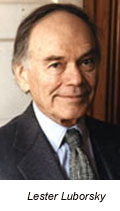
레스터 루보스키
People repeat their core conflictual relationship themes without being aware of it. The experience of rejection from parents replays in relationships with bosses, friends, and even counselors.
— Luborsky & Crits-Christoph (1998)Humanistic Frame: Rogers's person-centered therapy focuses on “how clients experience their feelings” rather than diagnosis.
In one sentence: CBT sees “this person's thinking is the problem,” psychodynamic sees “this person's relationship pattern is the problem,” and humanistic sees “this person's environment is the problem.” The core value of AI supervision is the ability to use all three lenses simultaneously.
Verbatim Analysis: Where AI Particularly Excels
Verbatim is text that records every word of a counseling conversation. AI can analyze emotional flows, thematic patterns, and counselor-client interaction patterns across the entire verbatim transcript.

마이클 램버트
If meaningful change doesn't appear within the first 3-5 sessions, the treatment strategy should be revisited. The sooner the feedback, the better.
— Lambert (2013)Lambert's research raises another implication. It's important to quickly notice when counseling isn't working. AI can detect subtle emotional changes within sessions from verbatim transcripts alone.
칼 로저스
The most powerful healing tool in counseling is not technique but relationship. The experience of one human accepting another as they are within that relationship creates change.
— Rogers (1961)Ultimately, AI supervision's role is clear. AI is a “first-pass analysis tool.” But the subtle texture of the counseling relationship, nonverbal cues, and interpretation of cultural context remain in the domain of human supervisors.
History of Verbatim Analysis: Rogers Records Counseling Sessions
Verbatim transcripts becoming a core tool in counselor training is thanks to Carl Rogers. In 1942, Rogers began electrically recording counseling sessions at Ohio State University with graduate student Bernard Covner. That same year, Counseling and Psychotherapy included 178 pages of the complete 8-session verbatim transcript of the “Herbert Bryan” case — the first full-session verbatim ever published in psychotherapy history.
Why was this revolutionary? Psychoanalysis at the time was closed. What happened inside the counseling room depended solely on the counselor's retrospective reports. Rogers recording entire sessions and publishing verbatim transcripts was the first time the “black box” of counseling was opened. Over 150 research papers subsequently emerged from this data.
칼 로저스
We recorded and transcribed counseling sessions to look into the reality of counseling that even counselors themselves didn't know. Self-reports always involve distortion of memory.
— Rogers (1942)Verbatim analysis subsequently developed in multiple directions. In the 1950s-60s, Charles Truax and Robert Carkhuff developed methods to measure empathy, unconditional positive regard, and congruence on 5-point scales using verbatim transcripts. In the 1980s, Luborskysystematized methods for extracting relationship episodes from verbatim transcripts to analyze CCRT patterns.
As of 2025, AI has become the latest tool for verbatim analysis. Emotion coding, theme classification, and pattern exploration that researchers used to spend hundreds of hours doing manually, AI performs in minutes. Just as Rogers opened counseling's black box with electrical recordings, AI provides tools to analyze that data far more precisely than before. The tools have changed, but the purpose remains the same — objectively understanding “what actually happens in counseling.”
Historical Development of the Three Major Counseling Schools
To compare case conceptualization across three theories, we need to understand the historical context of where each theory came from. All three schools emerged in the early-to-mid 20th century, but their starting points and development paths were completely different.
Psychodynamic: From Freud to Relational Schools. After Sigmund Freud founded psychoanalysis in the 1890s, the theory branched into three directions.
- Ego psychology (Anna Freud, Heinz Hartmann, 1930s-50s) — Developed Freud's structural model to emphasize the ego's adaptive functions.
- Object relations theory (Melanie Klein, D.W. Winnicott, 1940s-60s) — Early caregiver relationship experiences form an internal “relational template.”
- Self psychology (Heinz Kohut, 1970s-80s) — Viewed empathic responses from others as essential for healthy self-development.
Luborsky's CCRT analysis provided a methodology for empirically studying relationship patterns within this psychodynamic tradition.
레스터 루보스키
People repeat the same relational scripts. The wish-response-self-response pattern formed in parental relationships replays in all subsequent important relationships.
— Luborsky & Crits-Christoph (1998)Humanistic: From Rogers to Existentialism.
- Carl Rogers (1940s) — Founded client-centered therapy.
- Abraham Maslow (1943~) — Broadened the theoretical foundation of humanistic psychology with the hierarchy of needs and self-actualization concepts.
- Rollo May, Irvin Yalom — Integrated the existentialist tradition into counseling.
CBT: From Beck to the Third Wave.
- 2nd generation — Aaron Beck's cognitive therapy (1960s) and Albert Ellis's REBT (1955) form the two pillars.
- 3rd generation (1990s~) — Steven Hayes's ACT, Marsha Linehan's DBT, Zindel Segal et al.'s MBCT. Shifted focus from “change your thoughts” to “change your relationship with your thoughts.”
As of 2026, CBT has accumulated the most empirical evidence of any therapeutic approach, with over 500 randomized controlled trials (RCTs) demonstrating its effectiveness.
Knowing the history of these three schools increases the accuracy of case conceptualization. AI analyzes according to theoretical rules, but understanding the context and limitations of those theories' origins is the counselor's responsibility.
How Does AI Case Conceptualization Actually Work?
AI case conceptualization involves three steps. First, prepare and input the verbatim transcript into AI. Second, use theory-specific prompts to request analysis. Third, critically review and integrate AI's results.
Step 1: Verbatim Pre-processing — De-identification comes first. Before inputting counseling verbatim transcripts into AI, de-identification is mandatory. Gainer(2025) calls de-identification “the ethical ticket to AI supervision.”
The process of creating verbatim transcripts can also be automated with AI. meeting.tobl.ai transcribes conversations in real-time, automatically distinguishes speakers, and provides AI analysis.
세네카 R. 게이너
De-identification is the ethical ticket to AI supervision. Without this ticket, no matter how excellent the AI analysis, it cannot be ethically justified.
— Gainer (2025, p. 175)Step 2: Theory-specific Prompt Design. Request AI to analyze the same verbatim transcript through three different theoretical lenses. The more specific the prompt, the better the results.
CBT prompt example: From this transcript, Beck's cognitive model: extract automatic thoughts, classify cognitive distortion types, and infer core beliefs.
Psychodynamic prompt example: From this transcript, Luborsky's CCRT analysis: extract wish, response of others, and response of self.
Humanistic prompt example: From this transcript, Rogers's theory: explore the discrepancy between ideal self and real self.
Applying three prompts to the same transcript transforms the same client's same story into three completely different case conceptualizations.
Track Emotional Flow and Turning Points Emerge
Emotional flow analysis is a powerful tool complementing case conceptualization. When you ask AI to classify emotions and rate intensity for each utterance, emotional turning points become visible.
The practical value of emotional flow analysis lies in making supervision time more efficient. When AI first identifies the three segments with the greatest emotional shifts, supervisors can focus deeper analysis on those segments.
Michael Lambert's OQ-45 research shows that if meaningful change doesn't appear in the first 3-5 sessions, the treatment strategy should be revisited. AI's emotion analysis tracks emotional changes at the utterance level.
마이클 램버트
Change in counseling doesn't happen only in moments of grand insight. From anxiety to relief, from shame to self-acceptance — subtle emotional shifts accumulate to create change.
— Lambert (2013)세네카 R. 게이너
Emotional flow analysis allows supervisors and novice counselors to 'read the same map' and have conversations.
— Gainer (2025, p. 180)Another application of emotional flow analysis is “counselor self-reflection.” Patterns in the counselor's utterances can objectively reveal signs of their own discomfort intruding.
AI Supervision: What It Does Well and What It Doesn't
Three advantages of AI supervision: 24/7 immediate feedback, multiple theoretical perspectives at once, and no emotional bias.
But structural limitations are clear: can't read nonverbal cues, can't assess the quality of the counseling relationship, and may miss Korean cultural context.
So Gainer (2025) proposes a “hybrid supervision model.” AI handles “prep work” while humans handle “deep interpretation.”
칼 로저스
To truly understand a client, the counselor must enter the client's world. But they must not lose themselves within that world.
— Rogers (1980)Rogers's words precisely summarize the position of AI supervision. AI provides a “map,” but walking alongside the client is something only a human counselor can do. Clearly distinguishing the roles of technology and humans is the first task of the AI-era counselor.
History of Supervision: From the Discrimination Model to AI Supervision
Supervision is the core of counselor training. It's the process by which novice counselors develop counseling competencies under the guidance of experienced supervisors, and it's the oldest and most universal training method in counseling education. Theoretical development of supervision can be organized into three major streams.
Therapy-theory-based models (1950s-1970s). Early supervision proceeded according to the counseling theory the supervisor followed. The problem was that the supervisor's theoretical bias was transmitted directly to the trainee.
Bernard's Discrimination Model (1979). Bernard proposed an “atheoretical” framework that doesn't tie supervision to a specific theory. A 3x3 matrix combining three supervisor focus areas — intervention, conceptualization, personalization — with three roles — teacher, counselor, consultant.
세네카 R. 게이너
The area where AI supervision performs well in Bernard's Discrimination Model is conceptualization (pattern analysis, theory application). Personalization (exploring the counselor's emotional responses) remains the unique domain of human supervisors.
— Gainer (2025, p. 190)Stoltenberg's Integrated Developmental Model (IDM, 1981). Stoltenberg described the process of trainees growing from novice to expert in 4 stages.
AI supervision adds a new dimension to this developmental model. For Stage 1 trainees, AI can function as a “24/7 accessible assistant supervisor.” For Stage 2 trainees, AI serves as a “mirror” to objectively identify biases. For Stage 3 trainees, AI becomes a “research assistant” tool for rapidly exploring various theoretical perspectives. Remember that AI utilization strategies differ for each developmental stage.
BRIDGE Framework: 6 Steps for Integrating AI into Counseling
Gainer(2025) proposes BRIDGE as a step-by-step framework for integrating AI analysis results into actual counseling. AI analysis is not counseling in itself. A process is needed to therapeutically utilize analysis results within the client relationship, and BRIDGE is the map for that process.
세네카 R. 게이너
BRIDGE is a framework that uses AI not as the 'master' but as a 'bridge' in counseling. It starts from AI analysis, but the destination is always the therapeutic relationship with the client.
— Gainer (2025, p. 195)The core principle of BRIDGE is that “the client, not AI, is at the center.” There's a reason B (Build rapport) comes first — no matter how sophisticated the AI analysis, it's ineffective without being placed on top of a therapeutic relationship. Lambert(2013)'s research shows that 30% of counseling outcomes come from the therapeutic relationship, and 15% from techniques.
The D (Discuss with client) step requires particular care. Just because AI analyzed “the core belief is a sense of incompetence” doesn't mean you should tell the client directly — it could backfire. Translating AI's language into the client's language is the counselor's role.
In the E (Evaluate outcomes) step, AI can compare emotional flows across sessions to visualize the trajectory of change. As Lambert's research shows, if change doesn't appear within the first 3-5 sessions, the strategy should be revisited. BRIDGE's E step provides a structure for performing this review systematically.
Hands-On: Analyzing Verbatim Transcripts with AI for Case Conceptualization
This hands-on session has three goals. First, input a de-identified counseling verbatim transcript into AI to analyze emotional flow. Second, compare case conceptualizations of the same transcript from CBT, psychodynamic, and humanistic perspectives. Third, practice critically reviewing AI-generated results.
The verbatim transcript for practice is a de-identified sample distributed in class. It's approximately 2,000 characters long, with the client's main concerns being academic stress and family conflict.
Before starting, one important note: when inputting verbatim transcripts into AI, never use materials containing actual client personal information.
Five Questions for Reviewing AI Analysis
AI-generated analysis should not be accepted at face value. Gainer(2025) says to ask five questions. (1) Where in the transcript is the evidence for this analysis? (2) Could the same words be interpreted differently? (3) Would the analysis change if facial expressions or voice were visible? (4) Was Korean cultural context sufficiently reflected? (5) What would an experienced supervisor dig deeper into?
세네카 R. 게이너
AI analysis should neither be blindly trusted nor wholly rejected. The ability to selectively accept and supplement based on the counselor's clinical judgment — this is critical AI literacy.
— Gainer (2025, p. 185)These five questions are the starting point for “critical AI literacy,” a core competency for AI-era counselors.
칼 로저스
Experience is my highest authority. Any idea, anyone's words, must be verified through my own experience.
— Rogers (1961)아론 T. 벡
The most dangerous thing in cognitive therapy is when therapists become captive to their own hypotheses and ignore the client's actual experience.
— Beck (1979)Beck's principle applies directly to AI analysis. AI-generated case conceptualization is a “hypothesis,” not a “diagnosis.”
What You See When Comparing Practice Results
Placing three theoretical case conceptualizations side by side reveals interesting discoveries. Which interpretation is correct? All three can be. This is the nature of counseling theory.
Period 3 Discussion: What We Will Build
In Period 1 we asked “Who are we as professionals?”, in Period 2 we experienced AI case conceptualization firsthand. In Period 3, we map the 14 projects from Week 3 to the full counseling journey and build an integrated platform vision.
The 14 project ideas from Week 3 have been mapped to the counseling end-to-end journey. Stages marked with red borders are still empty — opportunities we need to fill.
- Waitlist stabilization app
- Center operations automation
- Theory-based counseling app
- Case assignment automation
- Virtual case conceptualization app
- Couples counseling check app
- Counselor AI chatbot assistant
- Theory-based structured counseling
- Divergent thinking organizer
- Mood journal app
- Client feedback tracking
- Couples communication check
- Suicide crisis response app
- Waitlist stabilization app
- Post-counseling reflection/visualization app
- Mood journal app
The “Awareness” stage (realizing I have a problem) and “Termination” stage (properly concluding counseling) are empty.
14 Separate Apps vs 1 Integrated Platform
What if we build each of the 14 ideas as a separate app? 14 logins, 14 databases. Instead, building one integrated platform with each team adding modules means one login, one data source.
The platform architect (professor) builds the skeleton, and module development teams (students) add features. Students learn real company development processes.
세네카 R. 게이너
The professional agency of counselors who only 'use' AI tools is fundamentally different from those who 'design' AI tools.
— Gainer (2025, p. 210)For counselors to become “self-actualization guides” beyond “mind healers” in the AI era, counseling alone within the counseling room is insufficient. They must become people who can design and build the entire counseling ecosystem.
References
- Beck, J. S. (2020). Cognitive behavior therapy: Basics and beyond (3rd ed.). Guilford Press.
- Bernard, J. M. (1979). Supervisor training: A discrimination model. Counselor Education and Supervision, 19(1), 60–68.
- Gainer, S. R. (2025). The counseling singularity: AI integration in therapeutic practice. Professional Publishing.
- Lambert, M. J. (2013). The efficacy and effectiveness of psychotherapy. In M. J. Lambert (Ed.), Bergin and Garfield's handbook of psychotherapy and behavior change (6th ed., pp. 169–218). Wiley.
- Luborsky, L. (1984). Principles of psychoanalytic psychotherapy: A manual for supportive-expressive treatment. Basic Books.
- Luborsky, L., & Crits-Christoph, P. (1998). Understanding transference: The Core Conflictual Relationship Theme method (2nd ed.). American Psychological Association.
- Mehrabian, A. (1971). Silent messages: Implicit communication of emotions and attitudes. Wadsworth.
- Rogers, C. R. (1942). Counseling and psychotherapy: Newer concepts in practice. Houghton Mifflin.
- Rogers, C. R. (1957). The necessary and sufficient conditions of therapeutic personality change. Journal of Consulting Psychology, 21(2), 95–103.
- Stoltenberg, C. D. (1981). Approaching supervision from a developmental perspective: The counselor complexity model. Journal of Counseling Psychology, 28(1), 59–65.
- Torous, J., et al. (2021). The growing field of digital psychiatry. World Psychiatry, 20(3), 318–335.
- Crofford, M., et al. (2026). Counseling professionals' perspectives on AI integration in education and supervision. Counselor Education and Supervision.
- Kaufman, S. B. (2023). Self-actualizing people in the 21st century. Journal of Humanistic Psychology, 63(1), 5–36.
- Yin, Y., & Zhang, X. (2025). On the relevance of Maslow's need theory in the age of AI. Technological Forecasting and Social Change, 210, 102537.
- Research.com. (2026). AI, automation, and the future of clinical mental health counseling degree careers.
- 유호현. (2026). AI 시대, 직업은 ‘스킬’이 아니라 ‘목적’으로 정의된다. hohyon.com/writings/ai-era-jobs